
Immanuel
On presence, belonging, and why connection is not enough.

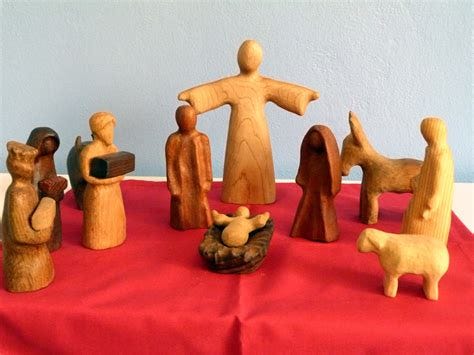
Immanuel — God with us.
Markets are down.
Politics feels theatrical. Institutions inspire less confidence than they once did. Every week arrives with a new crisis and a new reason to recalibrate.
People have felt this way before.
Political Panic and the Problem of Trust
Isaiah 7 opens in political panic.
King Ahaz of Judah is watching a military alliance form against him. Two neighboring kingdoms are threatening Jerusalem. He is calculating options, alliances, survival.
Isaiah arrives with an unexpected message: do not be afraid. Trust God.
Ahaz is unconvinced. He has already chosen a solution — Assyria, the dominant empire of the day. And Assyria really was powerful. It really could solve his immediate problem.
It just could not carry the weight of ultimate trust.
Isaiah’s warning is not that empires are useless. It is that tools make poor saviors.
The Associations That Hold a Society Together
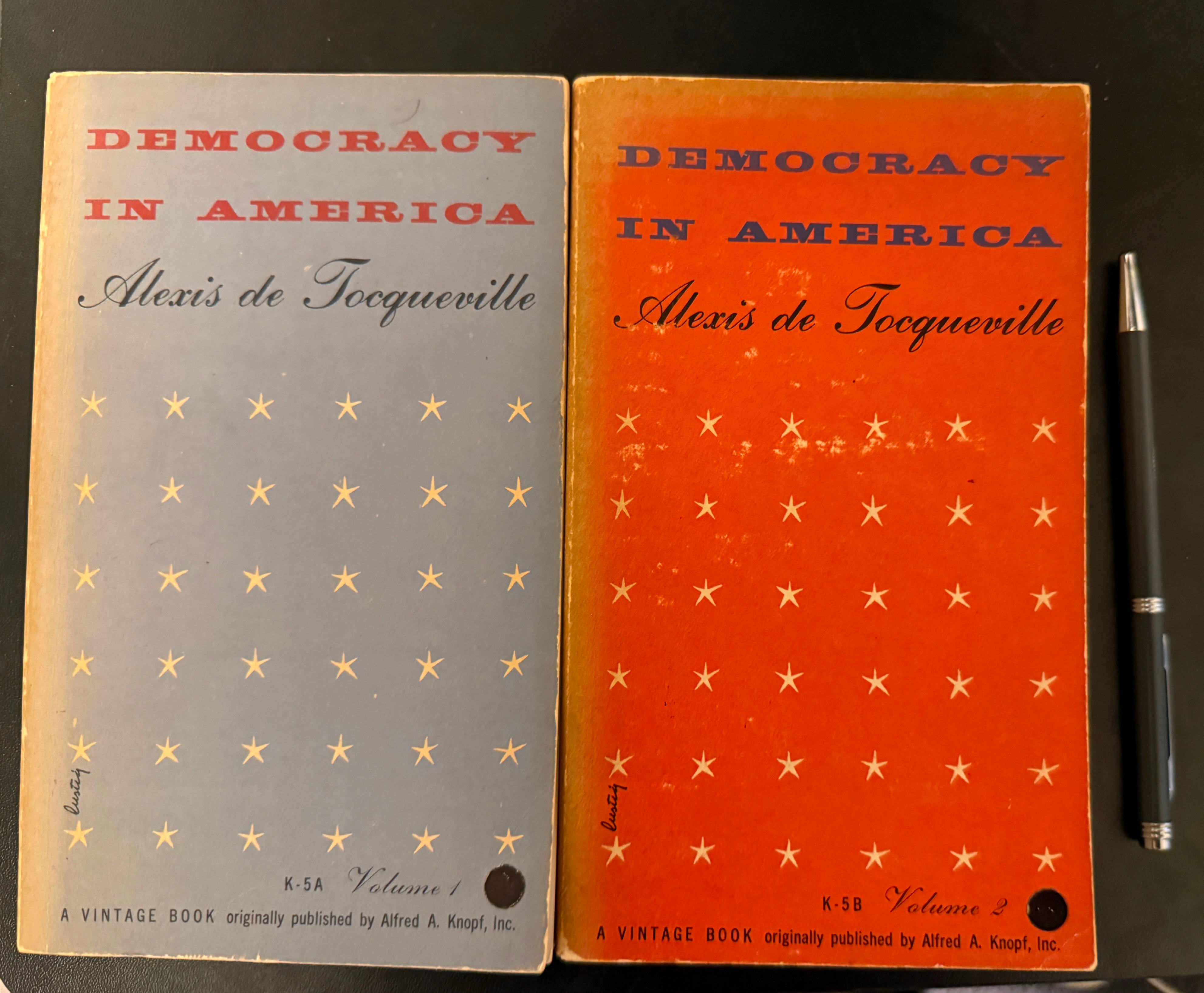
The 1954 editions on my shelf are the ones pictured above.
The copies I actually read are on a Kindle to spare the spines.
Alexis de Tocqueville spent the 1830s watching American democracy try to hold itself together, and what he found surprised him. The republic did not cohere through its federal architecture or its constitutional mechanisms. It cohered through its associations — the ten thousand voluntary gatherings of neighbors, congregants, tradesmen, and citizens who chose to act together on something small and local. These associations were, in his view, the real infrastructure of democratic life. Remove them, and what remains is a mass of individuals, each one equal to every other, and each one alone.
Tocqueville’s concern was not primarily political. It was anthropological. A society of isolated individuals, however free in principle, becomes ungovernable in practice — not by tyrants necessarily, but by its own drift. Disconnection is not just uncomfortable. It is structurally dangerous.
Belonging Must Be Practiced
A century later, Dietrich Bonhoeffer opened Life Together with a warning that cuts in the opposite direction.
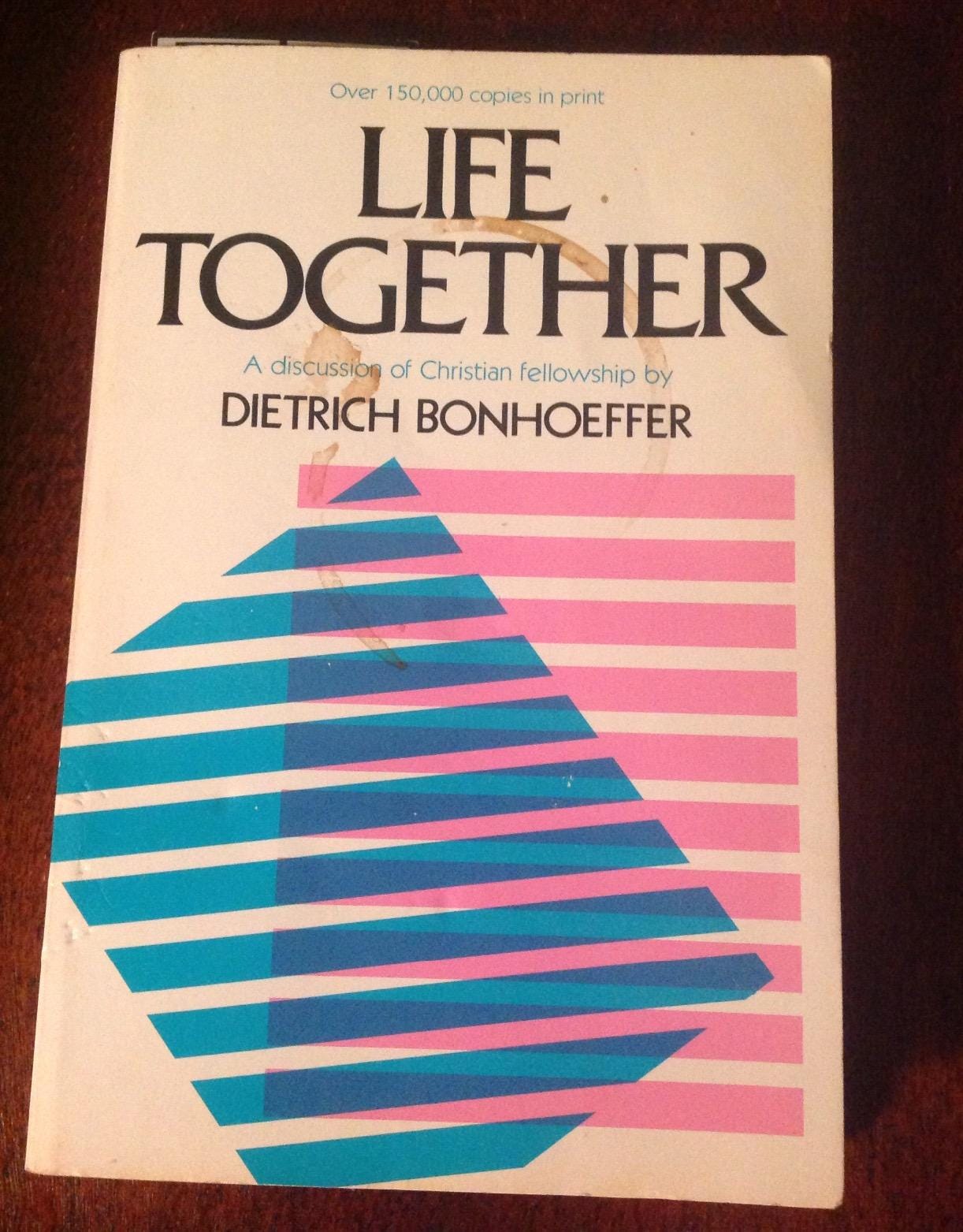
“He who loves his dream of a community more than the Christian community itself becomes a destroyer of the latter.”
The community we imagine — ordered, harmonious, exactly the kind of belonging we were hoping for — is, Bonhoeffer argues, the enemy of the community we actually need. Real community is not what we construct around our preferences. It is what we receive, and consent to, in all its difficulty.
Bonhoeffer was writing from experience. The Finkenwalde seminary, which he led for two years before the Gestapo shut it down, was a deliberate experiment in common life — daily prayer, shared meals, confession, work. Not a retreat from the world. A formation in it. He understood that belonging has to be practiced, not merely declared.
Isaiah offers the theological ground beneath both of these observations.
Into Ahaz’s moment of political confusion — not after the crisis, not during prosperity, but into the middle of it — he speaks one of the most startling promises in Scripture:
Behold, the virgin shall conceive and bear a son, and shall call his name Immanuel.
God with us.
The answer to political confusion is not a better forecast. It is presence.
Connection Is Not Belonging
Modern society is remarkably good at helping us connect.
We send messages around the world instantly. We move money globally. We accumulate followers, contacts, networks.
And yet loneliness keeps rising.
This is not a paradox that technology will eventually resolve. It is closer to what Tocqueville feared: the erosion of the intermediate structures — the associations, the congregations, the neighborhoods — that sit between the individual and the state, and that do the actual work of holding people together.
Connection and belonging are not the same thing. Belonging costs more. It requires shared stories, shared rituals, shared responsibilities. Meals. Promises. Presence. The running group that meets every Saturday. The church that gathers every Sunday. Neighbors who know each other’s names.
These things do not scale. That is partly why they work.
Bonhoeffer again: “The physical presence of other Christians is a source of incomparable joy and strength to the believer.” Not their digital presence. Not their networked presence. Their physical presence.
The deepest human fear is not uncertainty. It is abandonment.
Political systems can provide order. Markets can coordinate activity. Technology can increase capability. Bitcoin can fix the monetary layer. AI can expand access to information. These are real goods.
None of them can answer the question underneath every other question: who is with me?
We do not eliminate the need to belong. We relocate it. Sometimes we find it in healthy places. Sometimes we pour it into politics, ideology, online tribes — institutions that cannot bear what we are asking them to carry. Tocqueville would recognize this pattern. A society that has dismantled its associations does not become free of the need for community. It finds substitutes that satisfy less and demand more.
The challenge of our moment is not primarily technological. It is relational. We are building extraordinary infrastructure for information and transactions. The question is whether we are still building infrastructure for belonging.
Immanuel
The world Isaiah inhabited was unstable. So is ours.
The names have changed. The empires have changed. The temptation is the same: find the strongest thing available and trust it completely.
Isaiah’s answer has not aged.
Trust God. Use tools as tools. Stay humble. Do not be afraid.
Jesus is Lord. Markets are not. Politicians are not. Technologies are not.
But here is the harder part — the part Bonhoeffer kept insisting on: the answer is not just a theological proposition. It is a practice. The infrastructure of belonging is built slowly, locally, through the ordinary friction of showing up.
The community is not something we design. It is something we receive.
And the deepest promise is still the oldest one.
Immanuel. God with us.
Further Reading
Democracy in America — On associations, civil society, and the social foundations of democratic life.
Life Together — A reflection on Christian community, presence, and the practice of belonging.
Paul Weaver writes at paulweaver34.substack.com on Bitcoin, faith, institutional trust, and the spaces between worlds.